Non-Communicable Diseases (NCD) Alliance Kenya, in partnership with the Ministry of Health and Novo Nordisk Foundation, initiated anchoring of the Partnership for Education of Health Professionals (PEP) in Kenya. PEP is a four-year programme which aims to strengthen the education of health professionals for the prevention and management of cardiometabolic diseases.
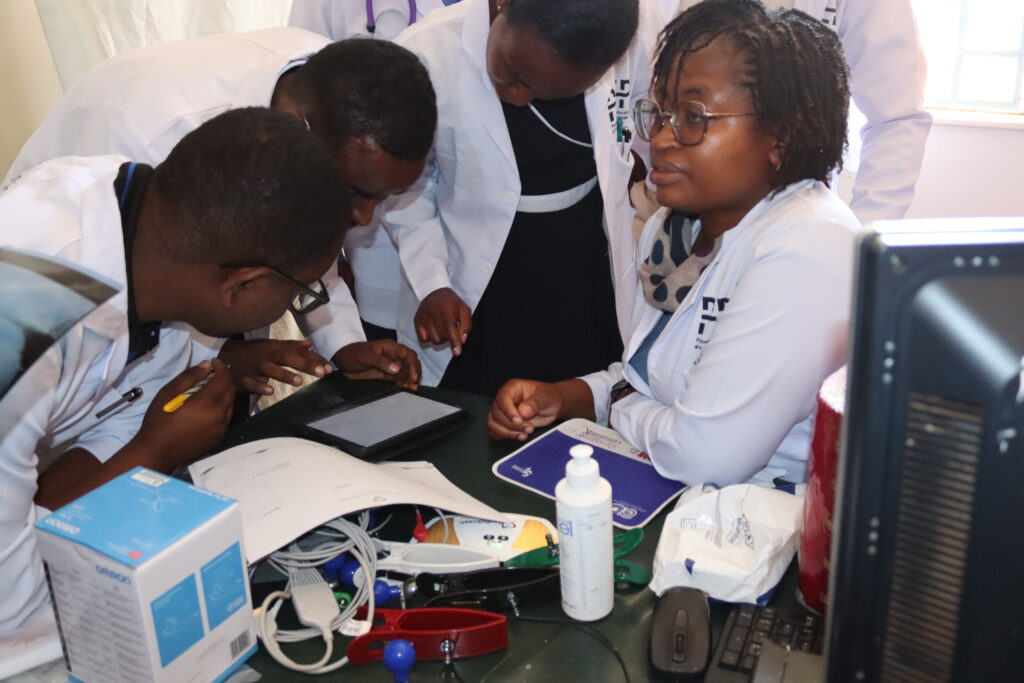
Expansion of PEP in Kenya is anchored on a pilot, implemented between 2024 and 2025, which assessed training needs, reviewed curricula, and identified gaps in cardiometabolic disease education across faith-based colleges, managed by Christian Health Association of Kenya and Kenya College of Catholic Bishops, as well as Kenya Medical Training College. Two short courses, one for Community Health assistants and a combined course for Nursing and clinical medicine, were developed and piloted in the Embu hub.
During the expansion phase, NCD Alliance Kenya will implement the two short courses in faith-based and public medical training colleges in five additional hubs to provide nationwide coverage. Involvement of the Ministry of Health in this process will ensure adherence to clinical guidelines, support supervision, and policy oversight. The requisite regulatory bodies will also be involved to ensure compliance with the relevant standards.
Countrywide roll-out of PEP comes at an opportune time when Kenya faces a double burden of disease, with increasing cardiometabolic diseases alongside persistent communicable diseases. Health professionals equipped with relevant, up‑to‑date competencies and supported by strong education and training systems aligned with national health priorities are required to meet the increasing burden of disease. Medical training colleges train a critical mass of Kenya’s frontline health professionals and are therefore an appropriate entry point to strengthen competencies required to meet evolving population health needs. Expansion of the PEP programme will address gaps in training of health professionals at medical training colleges by integrating cardiometabolic disease content into pre‑service and in‑service curricula and strengthening faculty capacity through mentorship and training in innovative teaching methods. By supporting educational research and peer learning across institutions and counties, the Programme will provide evidence of what improves learning outcomes in health professional education. Over the next four years, the Programme will reach over 1,910 faculty and 12,862 students.
“The Partnership for Education of Health Professionals (PEP) is a strategic investment in the future of healthcare. By strengthening the training and capacity of health professionals, we are directly improving the quality of care and health outcomes across our communities.” Gideon Ayodo – Program Manager, NCD Alliance Kenya
PEP expansion in Kenya commences concurrently with the PEP programme scale-up to Ethiopia, Uganda, and Tanzania, led by Amref Health Africa. By connecting PEP Kenya’s work to broader PEP learning networks across East Africa, India, and Denmark, the Programme will foster cross‑regional collaboration, learning exchanges, and partnerships, shared experience, and accelerate the uptake of effective educational approaches across diverse contexts.
Overall, the PEP programme aims to contribute to stronger health training systems and a fit-for-purpose health workforce, supporting improved prevention, early detection, and management of cardiometabolic diseases as part of routine care.
Media contact – Non-Communicable Diseases Alliance Kenya
Dr. Catherine Karekezi – Executive Director
NCD Alliance Kenya
[email protected]
Media contact – Novo Nordisk Foundation
Nils Eskestad, Senior Corporate Writer
Novo Nordisk Foundation
[email protected]